


Wastewater treatment decisions are often made beside a tank, not behind a desk. A change in settlement, a rising blanket or an unexpected mixed liquor result can affect how an operator investigates the process during a routine round. That is where a portable instrument has a clear role: it makes it possible to take useful measurements at the point where questions arise.
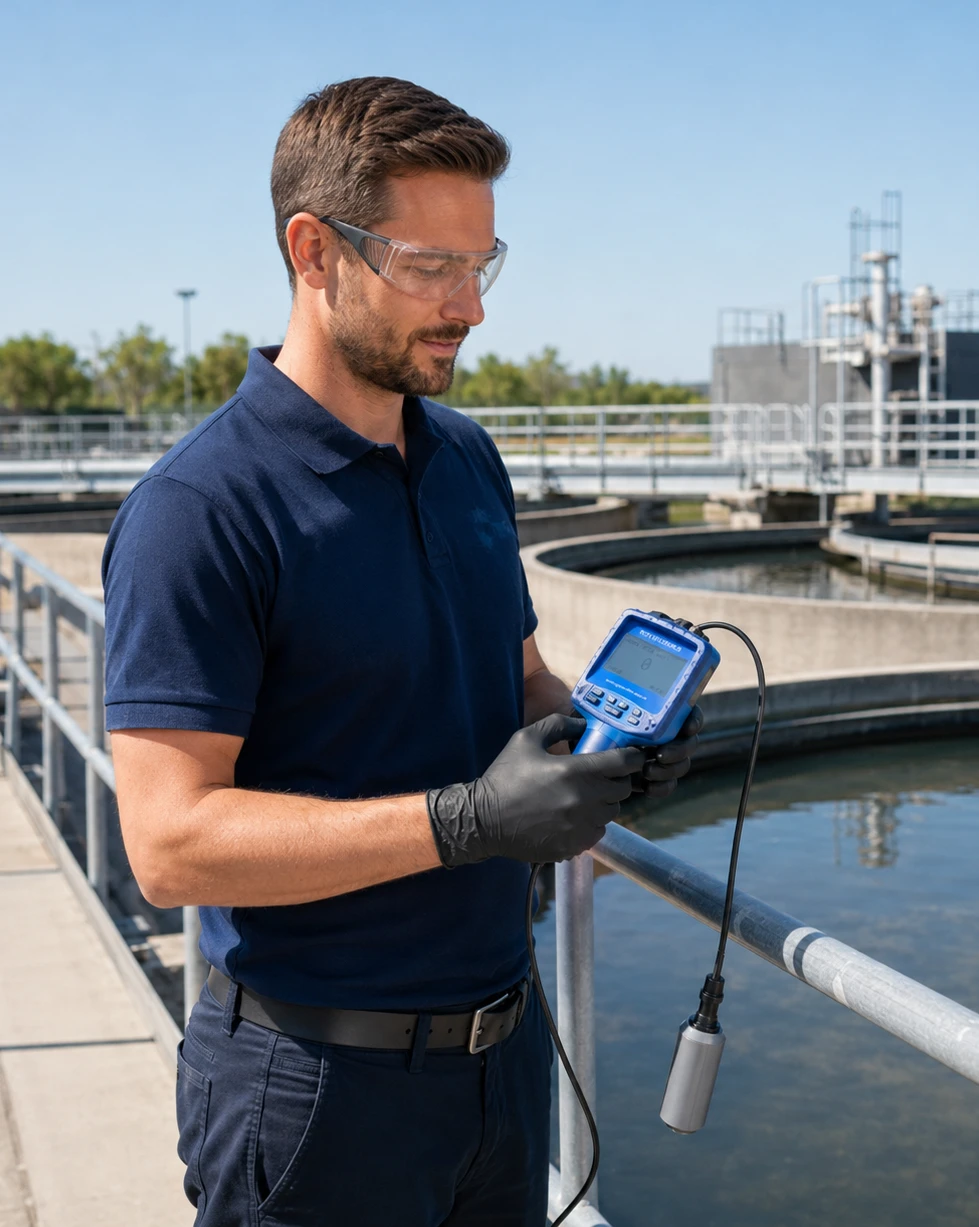
The Royce Aqua 22 brings mixed liquor suspended solids (MLSS), total suspended solids (TSS) and sludge blanket depth checks into one handheld field instrument. It is not intended to replace required laboratory analysis or compliance sampling. Instead, it gives treatment teams practical process information that can support quicker, better-informed day-to-day decisions.
Why field measurements matter in wastewater operations
Wastewater processes change through the day. Influent characteristics, weather, loading, aeration performance, return sludge settings and settling behaviour can all influence what operators see in aeration basins and clarifiers. A single fixed instrument or occasional laboratory result can be valuable, but neither always answers a question at a specific tank at a specific time.
Portable measurement helps close that gap. Rather than waiting for a sample to travel to a laboratory, or relying on a reading from a different point in the process, a technician can take the instrument to the tank, lower the sensor and record a reading during the round. Repeatable readings at agreed locations also make it easier to compare conditions from one shift, tank or treatment stage with another.
For an overview of the instrument’s measurement modes and field design, see how the Royce Aqua 22 works. PMA’s wider portable water-analysis range can also be useful where a site needs complementary field-testing tools. Our measurement parameters comparison explains when to use concentration or depth readings.
One portable instrument for two common checks
MLSS and suspended-solids checks
In TSS mode, the instrument measures suspended solids concentration. In activated-sludge applications, this can support routine MLSS checks in aeration basins, return activated sludge lines and other process locations where an operator needs a prompt indication of solids concentration. The stated measurement range is 0 to 20,000 mg/L.
The value of a portable check is not simply speed. It is also context. When a result appears different from expectation, the operator can compare other locations, repeat the check and relate the information to current process conditions before deciding whether further sampling or investigation is needed.
Sludge blanket depth checks
In level mode, the sensor is lowered into a tank to help identify the sludge interface while the integrated hydrostatic measurement provides depth. The Aqua 22 is specified for depths from 0 to 10 metres. This is particularly useful in secondary clarifiers, settlement tanks and sludge-holding applications where blanket position is a useful operational indicator. See the portable sludge blanket detector guide for the measurement method and applications.
A routine blanket profile can support more consistent observation of settling performance. It can also give an operator a clearer starting point when investigating a change in effluent appearance, sludge carryover risk or a difference between clarifiers. PMA’s dedicated Royce Aqua 22 reference page gives the product ranges and key operating features in more detail.

Where portable readings add the most value
Aeration basins and activated sludge processes
MLSS is one of the practical measures used by treatment teams to understand the biomass concentration in an activated-sludge process. A portable reading gives staff a way to check a basin at the process, particularly when reviewing a trend, investigating an operational change or comparing parallel lanes. It should always be understood alongside the site’s established sampling, control and laboratory procedures.
Secondary clarifiers
Clarifiers are a natural application for sludge blanket monitoring. Repeated measurements at agreed points can help operators observe whether the blanket is behaving consistently and whether conditions merit closer attention. Portable depth measurement does not prescribe the correct control action; it gives the team a timely, repeatable observation to use with the rest of their process information.
Sequencing batch reactors and RAS monitoring
SBRs and return activated sludge systems can benefit from measurements that are taken at the relevant stage of the cycle or line. A handheld instrument is easy to move between locations, allowing operators to build a more complete picture without treating one measurement point as representative of the entire works.
For a broader explanation of online and portable solids measurement, PMA’s TSS resource for wastewater treatment explains the distinction between laboratory TSS methods and process-control measurements. The PMA Wastewater News hub is also a useful route to related water-industry articles.
Practical benefits during routine rounds
Faster investigation at the point of need
When a process looks different, the first requirement is often dependable information. The Aqua 22 allows an operator to take a reading at the tank side rather than waiting for a separate instrument or a laboratory result. That can make an initial investigation more efficient and help define the next sensible check.
Consistent records across locations
The handheld unit can save readings against nine internal locations, with date and time information; compatible microSD cards can be used to record data in CSV format. A simple repeatable routine—same locations, agreed timing and a clear record—can make it easier to recognise whether a result is unusual or part of a developing trend.
Reduced need to carry separate equipment
Using one lightweight instrument for suspended-solids and sludge-blanket tasks can simplify routine field work. The Aqua 22 combines a handheld analyser with a submersible sensor and a 10-metre cable, which is practical for many tank-side measurement points. Its daylight-readable display and field-oriented design are intended to support outdoor use during normal rounds.

A useful complement to wider monitoring
Portable instruments are part of a wider measurement strategy, not a replacement for it. A site may combine routine field checks with laboratory sampling, online instrumentation, visual inspections and process-control data. The right combination depends on the application, the decision being made and the site’s operating procedures.
PMA has supported process measurement applications since 1971, including instrumentation, application guidance and service support for water and wastewater teams. If you want to discuss whether a portable MLSS and sludge blanket meter fits your own process, talk to the Royce Aqua support team or send an enquiry.
Choosing the right portable approach
The important question is not whether a portable device is better than every other method. It is which measurement will help the operator make a better decision at that moment. Royce Aqua 22 is suited to field checks of solids concentration and sludge blanket depth at the tank. For controlled, sample-based sludge settlement analysis, sites may also consider the S3A Suspended Solids Analyser, which is designed for parameters such as MLSS, SVI, supernatant clarity and floating sludge from a collected sample.
These instruments serve different workflows and can be complementary. A discussion about the process, measurement point and reporting requirement is normally the quickest route to the appropriate solution.
Frequently asked questions
Does a portable MLSS meter replace laboratory analysis?
No. A portable reading is a practical operational measurement that can support routine checks and investigations. Required laboratory analysis, compliance sampling and regulatory testing should continue according to the procedures that apply to the site.
Where can the Royce Aqua 22 be used?
Typical applications include aeration basins, secondary clarifiers, activated-sludge plants, sequencing batch reactors, return activated sludge monitoring, settlement tanks and industrial wastewater treatment.
What does the Aqua 22 measure?
TSS mode measures suspended solids concentration from 0 to 20,000 mg/L and can support MLSS checks. Level mode helps an operator identify the sludge interface and measure sludge blanket depth from 0 to 10 metres.
Can readings be saved for operational records?
Yes. Readings can be saved against nine internal locations, and compatible microSD cards support CSV recording for transfer into operational records and further review.
Discuss your wastewater measurement application
For application guidance, product support or an enquiry about the Royce Aqua 22, speak with PMA’s technical team.
