

Match sludge blanket monitoring to the decision you need to make
A portable meter and a continuously installed monitor can both provide useful sludge blanket information. The selection starts with when, where and how the information will be used. An operator taking a reading during a round has a different requirement from a control room that needs to see changes between visits.
This comparison focuses on those working differences. It complements the portable sludge blanket detector page and the site's existing explanation of why portable measurements can be useful. It does not rank unlike devices by a single specification or assume one approach suits every treatment works.
What a portable spot check provides
A portable check records an observation at a selected location and time. It can be planned into a routine round or used to investigate a specific question. The operator can also record the circumstances of the measurement, giving the process team context for interpreting it.
The limitation follows directly from that workflow: the record describes the checks that were actually made. If no measurement was taken during a change, the instrument cannot reconstruct that interval afterwards. A series of portable readings can provide a useful operational record, but it should not be presented as an uninterrupted trend.
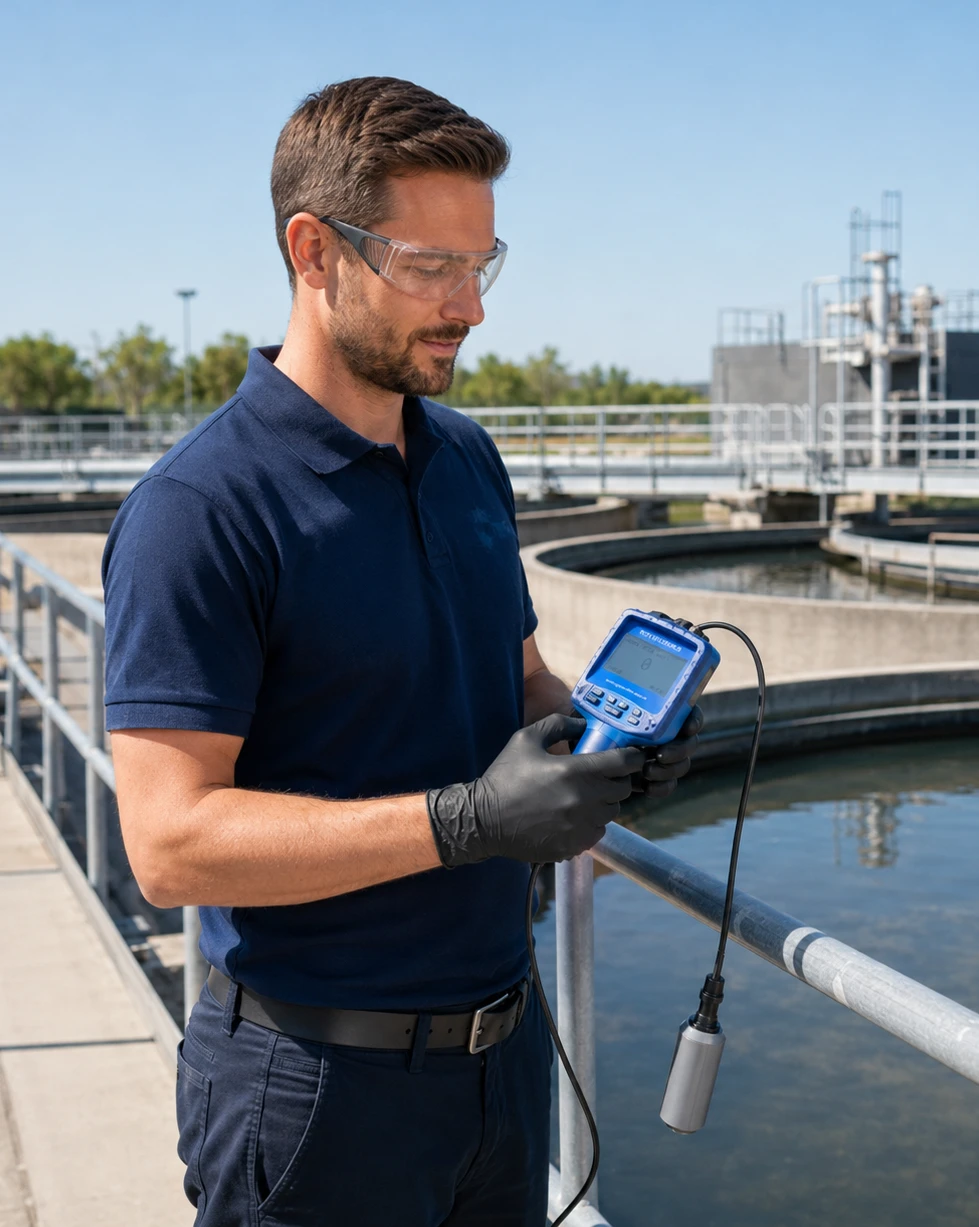
The Royce Aqua 22 combines portable suspended-solids measurement with sludge blanket depth checks. The manufacturer lists a suspended-solids range of 0–20,000 mg/L and a depth range of 0–10 metres. These are capabilities to assess against an application, not evidence that the instrument replaces every other form of process monitoring.

A portable system accompanies the operator between approved measurement points.
What continuous monitoring adds
An installed system can provide measurements while operators are elsewhere, subject to its configuration, maintenance and valid operating conditions. That makes the frequency of information a central part of the selection. Discuss the required trend, outputs and any alarm or control integration explicitly when specifying a system.
For example, Badger Meter describes EchoSmart as an ultrasonic system for continuous, real-time interface measurement. Pulsar describes Sludge Finder 2 as continuous ultrasonic sludge blanket measurement. These examples establish the category; they are not like-for-like price, accuracy or performance comparisons with the Aqua 22.
Before specifying any installation, establish how its data will reach the people or system making the decision. A display, a stored trend, an alarm and an automatic control action are different requirements. Confirm the selected model's actual functionality, installation and integration rather than assuming those features from the word “continuous”.
Compare the workflow, not just the measuring range
A range is useful for checking whether a proposed task is within the instrument's stated capability. It does not describe access, measurement frequency, data handling or the work required to keep the result dependable. Use a practical comparison alongside the specification review.
When is information available?
Portable: when an operator performs and records the check. Continuous: during configured operation at the installed measurement point.
How are locations covered?
Portable: through planned visits to approved measurement points. Continuous: through the installed sensor arrangement and its coverage.
What happens between visits?
Portable: no additional observation is created unless another check is made. Continuous: the installation can supply measurements for that interval.
What must be planned?
Portable: access, operator routine, setup and the measurement record. Continuous: installation, integration, maintenance and responsibility for reviewing the data.
How is the evidence used?
Portable: as a defined observation with its time, place and conditions. Continuous: as configured measurements or trends, interpreted with the wider process evidence.
These are selection prompts, not promises that every product in either category includes the same features. Confirm the actual configuration and operating procedure before using a comparison as a purchase specification.
When portable checks are a useful fit
Portable measurement is worth considering when the task calls for an operator to gather readings at several defined points, complete routine field observations or examine a specific issue. The decision depends on whether the planned frequency and coverage are sufficient for the question being asked.
For example, an agreed survey may need separate records from several tanks during the same round. The useful outcome is a set of labelled observations that the team can compare. Plan the route, the timing and the record before treating movement between tanks as an advantage in itself.
A portable instrument may also support a separate check near an installed measurement point. In that case, agree how locations, timing, reference depths and measurement methods will be reconciled. A difference between instruments is information to investigate; it does not automatically prove that either instrument is faulty.
When the requirement points towards continuous monitoring
If the team needs information during unattended periods, a plan consisting only of visits may leave an important gap. Discuss continuous monitoring where the operational requirement includes observing changes between rounds or making data available to another system.
State that requirement in a form that a supplier can assess. “We need a reading at the tank” is different from “we need a trend available to the control room between shifts”. Include the measurement point, expected process conditions and the intended response to the information.
Continuous measurement still needs ownership. The installation should have an agreed maintenance and verification routine, a way to recognise unavailable or questionable data, and someone responsible for acting on the information. Equipment selection alone does not create that operating arrangement.
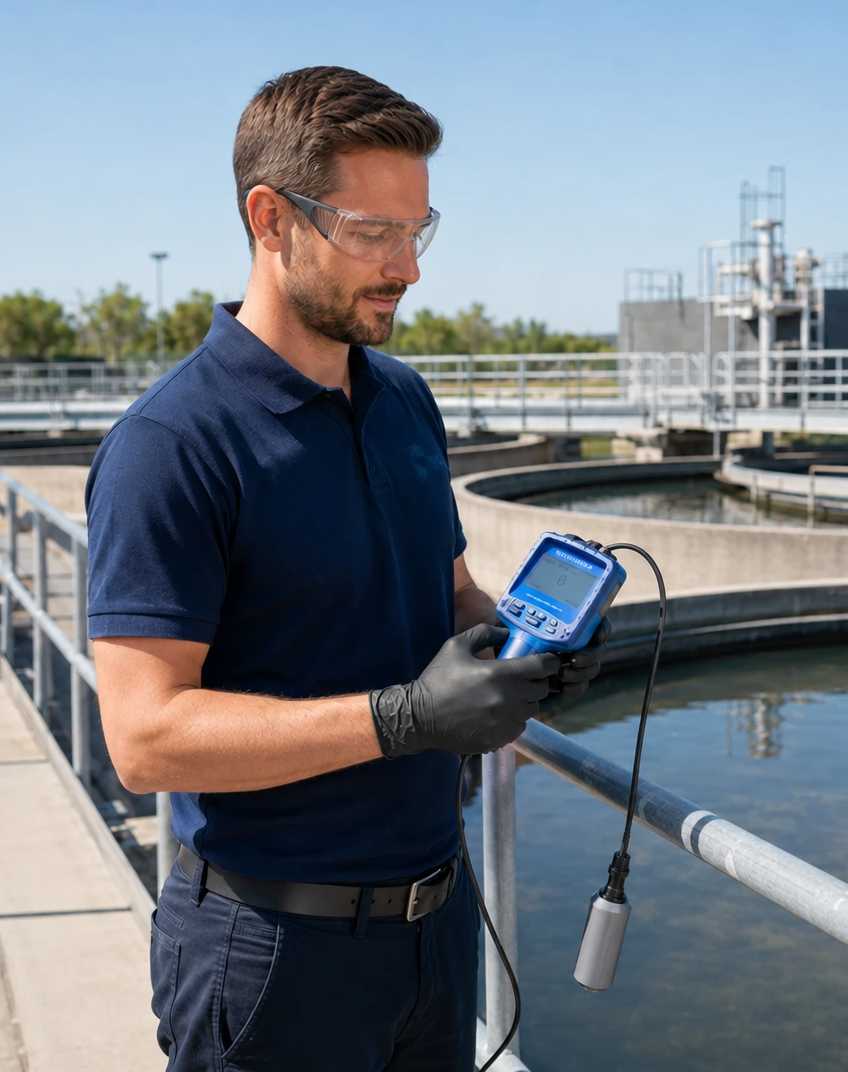
Choose measurement frequency around the information the process team actually needs.
Plan access and ongoing work before comparing cost
Ask what work the chosen approach creates over its life. For portable measurement, consider access to the intended points, the operator's routine, handling and recording. For an installed system, consider the mounting position, services, integration and the maintenance access required by the selected equipment.
A useful quotation request describes those requirements instead of requesting a generic “sludge blanket monitor”. That gives the supplier a clearer basis for identifying configuration gaps. It also helps the buyer compare quotations that cover the same intended task.
No general purchase-price or lifetime-cost advantage is claimed here. Those conclusions need current quotations and a defined scope. Differences in supplied sensors, installation work, outputs, service and data handling can make a headline comparison misleading.
Portable and continuous measurements can work together
The selection does not always end with one instrument category. A works may need an installed measurement at a key location and portable observations elsewhere. The purpose of the additional observation should remain clear, including what it can and cannot verify.
Use the parameter comparison to distinguish a solids-concentration requirement from a blanket-depth requirement. A high suspended-solids reading and a particular interface position are different quantities, even when both are relevant to the same investigation.
For the portable method itself, start with how the Aqua 22 works and the instructions supplied with the instrument. For instrument care or an unclear reading, the PMA support team can help identify the appropriate next check.
Prepare a clear application brief
Before choosing equipment, write down the process, the measurement required, the locations to cover, the information frequency and who will use the result. Add any existing monitoring, access limitations and required connection to other systems.
Then ask whether the proposed arrangement answers the original question throughout the periods that matter. That provides a stronger basis for selection than a broad claim that one technology is easier, faster or more accurate in every setting.
If the requirement includes portable checks, contact PMA about the Royce Aqua 22 with that application brief. The team can assess its suitability and identify where the task calls for further measurement or a different monitoring arrangement.
Questions about selecting a monitoring approach
Does a portable sludge blanket detector provide continuous monitoring?
A portable spot-check routine supplies the observations taken during that routine. It should not be described as an uninterrupted record of the periods between checks.
Can a portable meter verify an online monitor?
It can provide a separate observation. Define comparable locations, times, references and methods before deciding what a difference between the readings means.
Is continuous monitoring always the more expensive option?
No universal cost comparison is made. Compare current quotations against the same installation, operating and information requirements.
Does either approach replace required laboratory or compliance testing?
Continue the sampling and testing required by the site's procedures. A process-control measurement should be interpreted within its intended role.